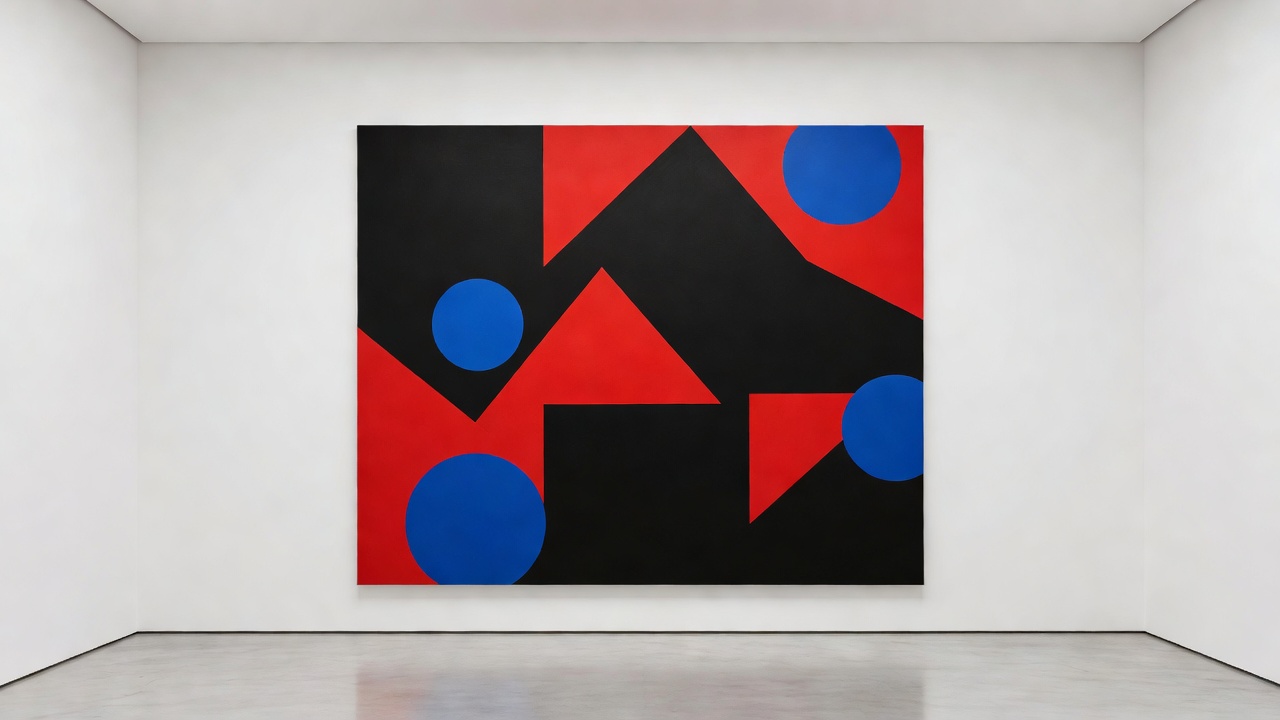
In structural interior design, artwork is often tasked with solving spatial problems rather than merely providing visual entertainment. Minimalist abstract art serves a specific utilitarian function: it introduces color, texture, and geometry into a room without imposing narrative or figurative clutter. It is the architectural equivalent of negative space on a wall.
The Psychology of Reduction
Minimalist abstraction strips art down to its foundational components: line, shape, tone, and texture. By removing recognizable subjects—landscapes, portraits, still lifes—the artwork bypasses the brain's need to interpret a story. This reduction lowers visual fatigue.
In highly complex rooms (e.g., spaces with intricate rugs, textured upholstery, or extensive shelving), a figurative painting competes for attention. A minimalist color field or geometric abstraction acts as a visual resting point, absorbing excess sensory data rather than contributing to it.
Geometry as Structural Reinforcement
Abstract art can be utilized to reinforce or counteract the existing geometry of a space.
- Vertical reinforcement: In rooms with low ceilings, vertical abstractions (tall, narrow canvases or pronounced vertical line work) draw the eye upward, artificially extending the height of the walls.
- Horizontal stabilization: In narrow corridors or tall, echoing spaces, broad horizontal color fields ground the room, emphasizing width and stability.
- Curvilinear contrast: In environments dominated by hard angles (square windows, blocky furniture, sharp countertops), introducing an abstraction composed of soft, organic curves softens the harshness of the architecture.
Color Theory in Abstraction
Because minimalist abstraction lacks narrative, its impact relies heavily on color theory and palette execution.
Monochromatic pieces—utilizing varying shades of a single hue—create deep textural interest without disrupting the room's established color scheme. Conversely, high-contrast geometric blocks (reminiscent of the De Stijl movement) can serve as the sole source of vibrant accent colors in an otherwise stark, neutral environment.
| Style Category | Visual Impact | Best Application |
|---|---|---|
| Color Field | Expansive, ambient, emotional warmth or coolness. | Bedrooms, formal dining areas, minimalist lounges. |
| Hard-Edge Geometric | Sharp, structured, highly architectural. | Offices, modern kitchens, industrial lofts. |
| Gestural Minimalism | Dynamic but sparse (e.g., single brushstroke). | Transitional spaces, entryways, brutalist interiors. |
Selecting Frame Profiles
The framing of minimalist abstract art is critical. Heavy, ornate frames destroy the reductionist intent of the piece. The objective is to contain the artwork with the slimmest possible boundary.
Canvas float frames—where a thin metal or wood perimeter is spaced a quarter-inch away from the canvas edge—are the industry standard for this genre. The shadow gap creates a distinct border without overlapping the painted surface, maintaining the structural purity of the composition.
Conclusion
Minimalist abstract art is a precise tool for spatial calibration. By relying on geometry, negative space, and calculated color fields, these pieces govern the mood and perceived proportions of a room without demanding narrative engagement.